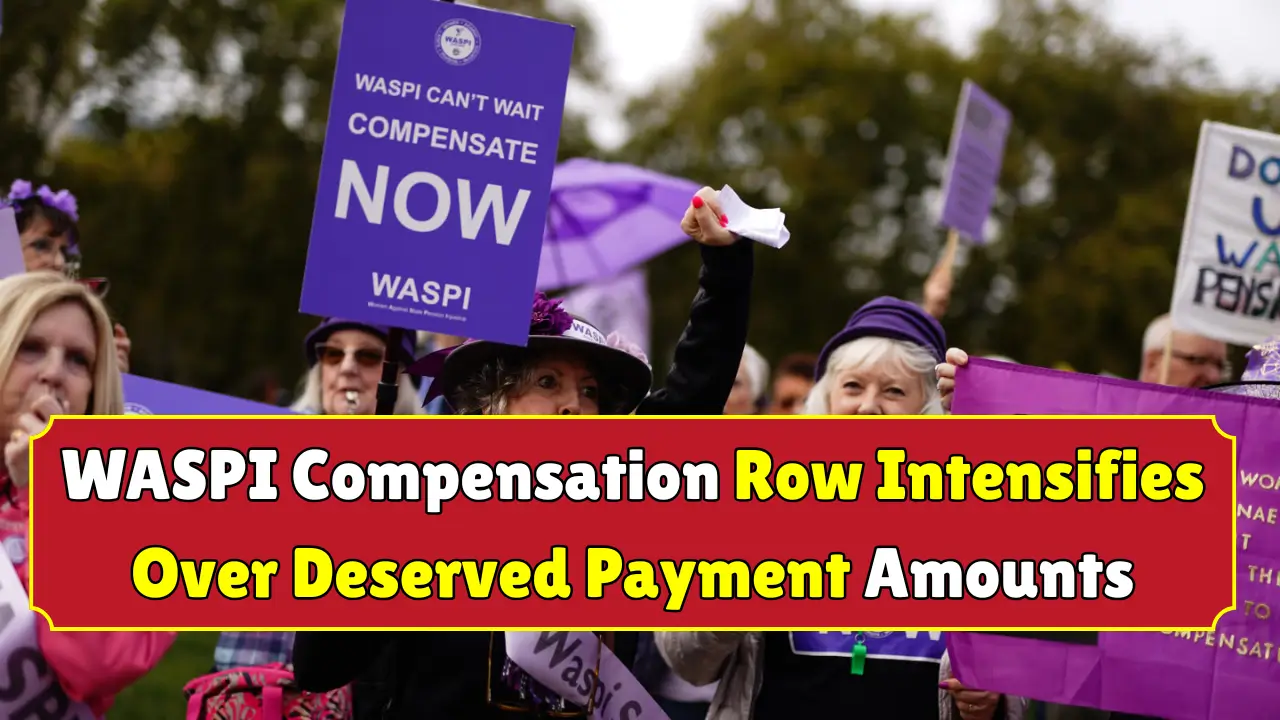
The WASPI compensation row has reached a fever pitch in early 2026, with campaigners and affected women across the UK demanding fairer payout figures amid government resistance and fresh legal pressures.
Born out of decades-old state pension age changes, this dispute pits millions of 1950s-born women against the Department for Work and Pensions (DWP), fuelling accusations of maladministration and inadequate redress.
As public outrage grows and parliamentary debates heat up, the question of “deserved” compensation amounts remains at the heart of the intensifying conflict.
Historical Roots of the WASPI Compensation Dispute
The origins of the WASPI compensation row trace back to legislative shifts in the mid-1990s and early 2010s, when the UK government accelerated increases to the state pension age for women. Initially set at 60, it rose to 65 and eventually 66, catching many women born in the 1950s off guard due to poor communication from the DWP.
These changes, enacted via the 1995 Pensions Act and the 2011 Pensions Act, aimed to equalise retirement ages between men and women but were implemented with what campaigners call shocking haste and opacity.
Women Against State Pension Inequality (WASPI), formed in 2015, emerged as the voice for approximately 3.8 million affected individuals. Many had planned their retirements around the old age of 60, only to face years of lost income, forced labour extensions, and financial hardship.
Personal stories abound of women remortgaging homes, dipping into savings, or working physically demanding jobs into their late 60s. The Parliamentary and Health Service Ombudsman (PHSO) later validated these grievances, ruling in March 2024 that the DWP’s failure to notify women adequately constituted maladministration.
This historical backdrop underscores why the WASPI compensation row intensifies over deserved payment amounts today. Campaigners argue that the government’s piecemeal notifications—some letters sent as late as 2012—deprived women of timely opportunities to adjust careers, savings, or lifestyles.
By 2026, with many now in their 70s, the emotional and financial toll has compounded, turning a policy misstep into a national scandal.

Key Milestones in the WASPI Campaign Timeline
The WASPI journey has been marked by persistent advocacy, legal battles, and government backpedalling. In 2017, an initial petition garnered over 100,000 signatures, prompting a Work and Pensions Committee inquiry that lambasted the DWP’s communication failures.
The PHSO’s 2024 report was a watershed, recommending compensation at Level 4 on its scale—£1,000 to £9,950 per woman, based on injustice severity—explicitly rejecting the DWP’s claim of no direct financial loss.
December 2024 saw the government initially dismiss these recommendations, citing a staggering £105 billion cost for a universal scheme. This sparked outrage, leading to a High Court judicial review threat.
By December 2025, just days before the hearing, the DWP agreed to reconsider, committing to a decision by February 2026 and covering over half of WASPI’s £180,000 legal costs. Pensions Secretary Pat McFadden acknowledged overlooked evidence, like a 2007 internal report highlighting notification gaps.
Yet, January 2026 brought fresh dismay: the government’s review upheld the rejection, arguing most women were aware of changes via media or forecasts. WASPI chair Angela Madden declared the women “not going away,” vowing renewed legal action.
As of March 2026, cross-party MPs and pensioner groups amplify calls for urgency, with the row intensifying over deserved payment amounts as campaigners push for tangible redress.
Government Stance and Economic Arguments Against Compensation
The DWP’s position in the WASPI compensation row centres on fiscal prudence and perceived awareness among women. Officials maintain that while maladministration occurred, it caused no widespread direct financial loss—women must prove individual harm, a high bar many cannot meet without records from decades ago.
The rejected £10.5 billion to £105 billion price tag looms large, with ministers warning it could destabilise public finances amid competing priorities like NHS funding and cost-of-living support.
Pat McFadden, in November 2025 Commons statements, framed the rethink as procedural fairness, not a payout guarantee. Critics, including retirement expert Hannah Martin of The Rich Retiree, counter that this ignores varied impacts—some women lost homes, others endured health declines from prolonged work.

The government’s tiered approach, if adopted, might offer modest sums, but campaigners decry it as insultingly low given lost earnings potentially exceeding £50,000 per woman.
This economic defence fuels the intensification of the WASPI compensation row over deserved payment amounts. Treasury modelling assumes blanket payments would set precedents for other groups, like men affected by later changes. Yet, with UK inflation easing and growth forecasts improving in 2026, advocates question why justice remains unaffordable.
Campaigners’ Push for Higher Deserved Compensation Levels
WASPI insists on compensation reflecting full injustice: lost pensions, opportunities, and distress. The PHSO’s £1,000-£9,950 band is a floor, not ceiling; campaigners seek £20,000+ for severe cases, arguing Level 4 understates emotional tolls like depression from dashed retirement dreams.
Angela Madden highlights how DWP complaint handling exacerbated suffering, with delays stretching 11 years.
Public support swells via petitions exceeding 400,000 signatures and MP endorsements. Groups like the National Pensioners Convention urge Parliament to legislate a scheme, bypassing DWP inertia. In March 2026 updates, WASPI petitions for individual assessments, factoring health, income loss, and caring roles many women juggled.
The row intensifies as experts like Hannah Martin affirm deserved payments but note quantification challenges. Flat-rate proposals risk unfairness—£10,000 might suffice for some, trivial for others facing bankruptcy. WASPI’s legal fund, bolstered by donations, eyes fresh High Court challenges, demanding transparency on DWP’s review evidence.
Comparative Compensation Table: PHSO Levels vs. WASPI Demands
To illustrate the gulf in the WASPI compensation row, consider this table comparing official recommendations to campaigner expectations. Figures reflect average estimates per woman, adjusted for 2026 inflation.
| Injustice Level | PHSO Recommended Amount | WASPI Suggested Minimum | Key Impacts Covered |
| Level 1: Minor distress | £100 – £500 | £1,000+ | Brief confusion, no major life changes |
| Level 2: Noticeable worry | £500 – £1,000 | £5,000+ | Delayed planning, minor savings dips |
| Level 3: Significant stress | £1,000 – £3,950 | £10,000+ | Career disruptions, health strains |
| Level 4: Severe/prolonged | £3,950 – £9,950 | £20,000+ | Home losses, lost pensions, emotional harm |
| Direct Financial Loss (Proven) | Case-by-case (avg. £5,000) | £45,000+ (6 years at £7,500/yr) | Foregone earnings, proven via records |
This table highlights why the row over deserved payment amounts rages: PHSO caps fall short of lived realities for many.
Broader Implications for UK Pension Policy
The WASPI compensation row reverberates beyond 1950s women, exposing flaws in pension communication and equality drives. Future rises to 67 and 68 loom, with men now equally impacted, prompting calls for universal forecasts via apps or annual statements. Labour’s 2026 manifesto nods to “fair transitions,” but specifics evade the fray.

Economically, resolution could boost consumer spending among pensioners, a key 2026 growth driver. Socially, it addresses gender disparities—women’s lower savings from career breaks amplify pension shocks. Delays risk eroding trust in the DWP, already strained by universal credit glitches.
As the row intensifies over deserved payment amounts, parallels emerge with Irish and Australian pension equalisations, where compensation flowed swiftly. UK lawmakers face a litmus test: prioritise women now or court endless litigation.
Voices from the Frontline: Personal Stories Fuel the Fire
Behind statistics lie harrowing testimonies amplifying the WASPI compensation row. Take Janet, a 71-year-old from Manchester, who remortgaged at 63 after pension delays, only to face repossession. “I trusted the government; they robbed my golden years,” she laments, echoing thousands. Similarly, Liverpool’s Susan worked as a carer till 67, her arthritis worsening sans rest.
These narratives, shared via WASPI meetings and media, humanise the dispute. Many forwent holidays, family time, or early inheritance for grandkids. Health ombudsman findings note suicides linked to despair, underscoring non-monetary losses.
In 2026 town halls, women chant “fair compensation now,” their placards decrying paltry proposals. Such grassroots fervour pressures MPs, with 200+ tabling amendments for mandatory payouts.
Political Pressures and Path Forward
Cross-party backing intensifies the WASPI compensation row. SNP and Lib Dems lead calls for £11,000 averages, while some Tories waver under constituent heat. Prime Minister’s Questions in February 2026 saw heated exchanges, with McFadden promising “no stone unturned” yet resisting timelines.
Legal avenues persist: WASPI’s suspended judicial review could revive by summer 2026 if talks stall. A private member’s bill for compensation gains traction, potentially forcing debate. Meanwhile, crowdfunding swells to £500,000+, signalling unyielding resolve.
Prospects hinge on Treasury sign-off; phased payments over 2027-2030 might emerge, blending ex-gratia sums with arrears. Campaigners vow vigilance, ensuring deserved payment amounts match injustice scales.
Lessons for Retirement Planning Amid the Turmoil
The WASPI saga imparts stark lessons for UK savers. Diversify beyond state pensions: auto-enrolment has swelled private pots since 2012, but check forecasts yearly via GOV.UK. Women, facing longevity risks, should model scenarios to 70+.
Experts urge SIPPs or workplace boosts, targeting 25% tax-free lumps. Inheritance rules allow spousal rollovers, mitigating gaps. As the row rages, tools like MoneyHelper offer free advice, bridging DWP shortfalls.
Ultimately, this dispute spotlights systemic pension opacity, urging reforms for transparent, equitable ageing.
5 Short FAQs on WASPI Compensation Row
Q1: What is WASPI?
A: Women Against State Pension Inequality campaigns for 3.8 million 1950s-born UK women hit by unnotified pension age rises from 60 to 66.
Q2: What compensation did PHSO recommend?
A: £1,000-£9,950 per woman at Level 4, based on maladministration severity, but government rejected it.
Q3: Why was compensation rejected in 2026?
A: DWP cited no proven direct losses for most and £10-105 billion costs as unaffordable.
Q4: What’s next for WASPI women?
A: Potential High Court action and parliamentary bills; decision pending further reviews.
Q5: How to check your pension age?
A: Use GOV.UK’s state pension forecast tool for personalised updates amid ongoing changes.